For one evening each week, the University of Nebraska–Lincoln’s Barkley Speech Language and Hearing Clinic becomes a home for conversation and connection — centered on a shared book.
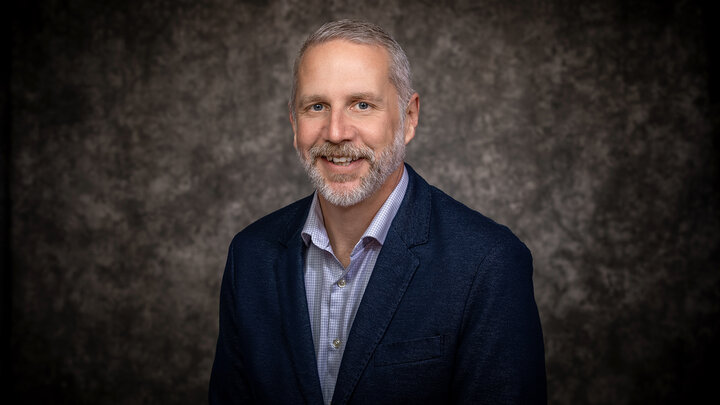
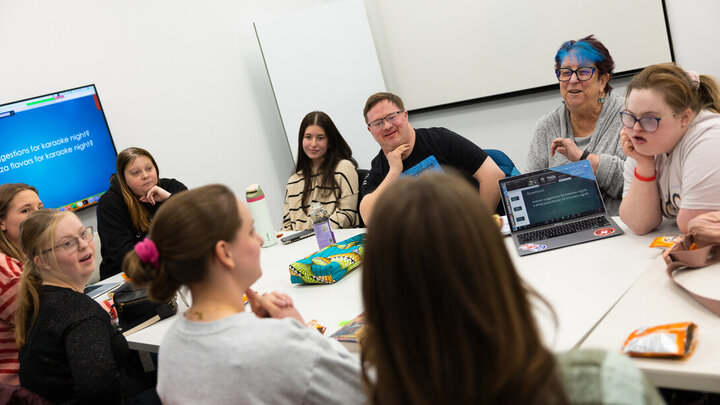
A book club coordinated by the clinic, part of the Department of Special Education and Communication Disorders, and the Down Syndrome Association for Families gives young adults with intellectual disabilities an opportunity to socialize, read and learn using their own ideas and expectations. Alicia Davis, lecturer in the department and the club’s coordinator, said the group gives its members ownership and independence.
“It gives them a purpose,” Davis said. “This is really their book club … Having them have some ownership is an important part.”
Meetings begin with an icebreaker question and reading a set of rules developed by the members. They abide by rules such as not interrupting each other, no screaming or swearing, and keeping phones put away during meetings. Davis said the meetings, especially creating their own rules like these, can teach the members about social settings.
“Maybe they learn what you don’t say out loud or about taking turns,” she said.
Members also vote on which books they read as a group. They have read such books as “Marley and Me” and “Wonder.” They are currently working their way through the “Harry Potter” series and finished the “Percy Jackson” series last year.
“The group had never finished a book series, so that was a huge accomplishment,” Davis said.
Discussion questions guide the conversation. The group might talk about how their own memories relate to events in the book or how they would react in a similar situation to the characters.
“We relate it to everyday life,” Davis said. “What is a friend? How do you stand up to people? We get really deep. We start concrete and get deep and insightful.”
They end each semester with a karaoke pizza party. They have also participated in trunk-or-treats at the Barkley Center several times.
Davis said families were looking for ways their loved ones could get socially active in a friendly and safe setting.
“They were looking for a group opportunity for young adults to get a chance to read and talk about what they read, but also to be out in public,” she said.
The structure and rules of the group have changed over the years to adapt to what members were looking for. Davis said she and other facilitators realized members’ goals for joining were not always the same as their parents’. For example, members decided to hold most meetings on campus at the Barkley Center.
“It felt like going to college,” Davis said.
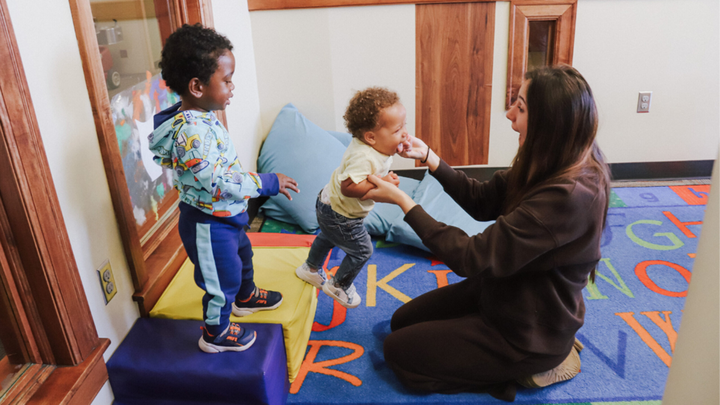
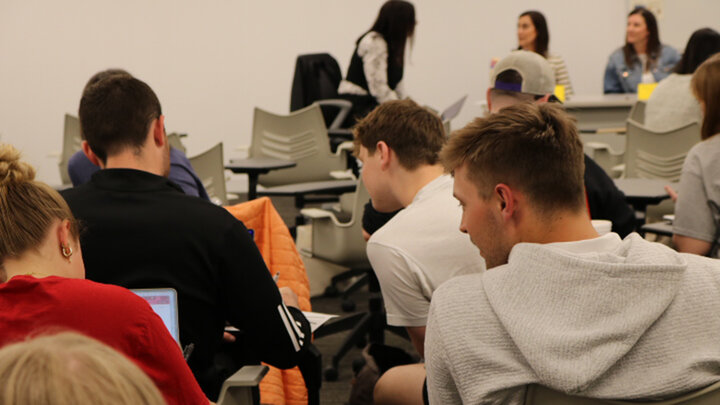
University students, both graduate and undergraduate, help with the group. Davis said she believes both students and members gain something from interacting with each other.
“We like having students because they’re peers,” she said. “And they get to see the potential of working with this population.”
She said members enjoy starting their own book collection and some have even signed up for their first library card. One parent told Davis their child didn’t read until they joined the club.
At times, some look at people with intellectual disabilities as never growing into adults, Davis said, but activities like the book club allow members to stretch themselves and demonstrate their full capabilities.
“They all have strong family support, so that was a hard lesson at the beginning for parents, but it’s a good place to start in terms of making choices,” she said. “They want to be part of a group where they’re not the person being taken care of.”
Davis said members leave the group with pride in their contributions and the choices they make about how it is run. She said they gain freedom and ownership through the conversations and relationships built in the book club.
“They feel like, ‘This is ours, not Mom and Dad’s,’” she said.
College of Education and Human Sciences
Special Education and Communication Disorders