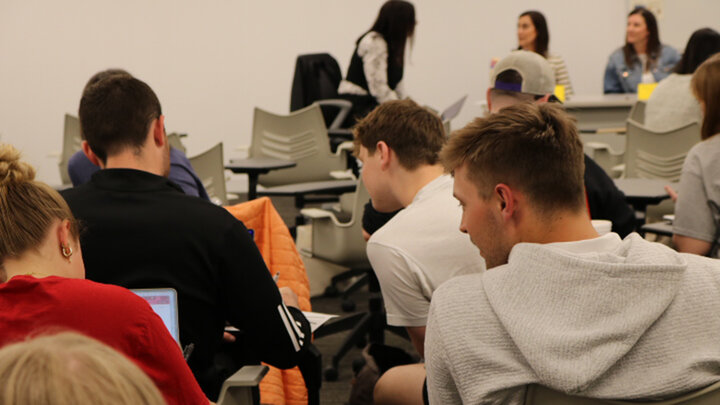
Students in the SPED 201: Introduction to Special Education course at the University of Nebraska-Lincoln recently gained insight into the power of teamwork in supporting students with diverse learning needs thanks to a panel of educators from Elliott Elementary School in Lincoln.
The panelists joined Erin Pfister’s class to discuss how collaborative practices strengthen instruction, communication and behavioral support in schools.
Pfister, a lecturer in special education and communication disorders, organized the panel to connect students with qualified professionals who exemplify effective, team-based approaches to special education.
“This course is one of the few opportunities to reach all education majors,” Pfister said. “I want students to see what strong collaboration looks like in practice and understand that supporting students is a shared responsibility.”
The Elliott team was selected for its strength in flexible service delivery, collaborative problem-solving, and strong communicative skills. The school also holds personal significance for Pfister, who taught special education at Elliott from 2003-08. During that time, staff implemented professional learning communities and worked collectively to improve student outcomes, helping establish a culture of shared leadership that continues today.
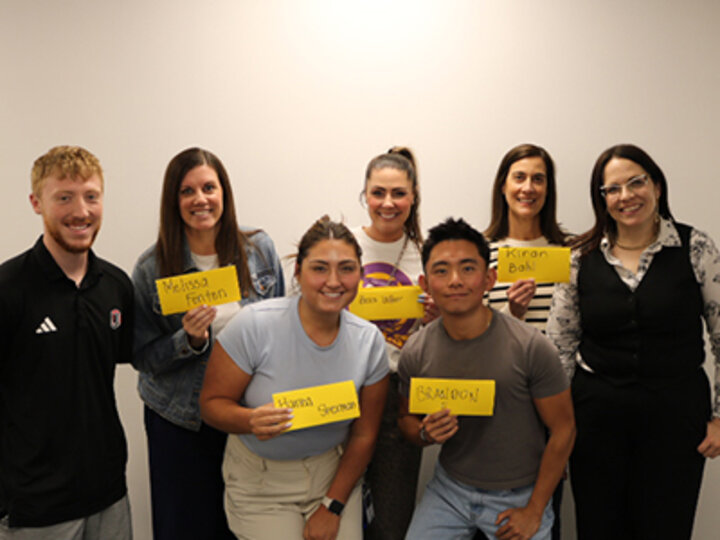
The panel reflected the interdisciplinary nature of special education teams. Participants included special education teachers, a school psychologist, and a behavior interventionist. Panelist members included Kiran Bahl, Brandon Ee, Melissa Fenton, Caleb Lemon, Hanna Sherman, Jen Steinheider and Becca Volker.
The session was structured as a moderated discussion, allowing panelists to introduce their roles and respond to student questions about collaboration, communication, and strategies for addressing behavioral needs. Pfister guided the conversation while encouraging open dialogue between students and panelists.
The audience included 46 Husker students preparing for careers in special education, elementary education, early childhood education, and secondary education. Eight students are participating in the Pathways Apprenticeship program, a partnership between Lincoln Public Schools and the university that provides firsthand experience in local classrooms.
By bringing experienced educators into the classroom, Pfister aims to help students connect course content to real-world practice and better understand how collaborative teams can improve outcomes for students with significant needs.
“Students often feel overwhelmed by the scope of special education and may think they are solely responsible for meeting every need,” Pfister said. “Hearing from a strong team helps them understand that collaboration is essential and that they will not be working alone.”
College of Education and Human Sciences
Special Education and Communication Disorders